Showing posts with label Buxted House. Show all posts

Sunday, 19 September 2021

Workhouse Runs - Buxted

 Buxted is an attractive village surrounded by farmland. However, not everyone would have been able to work and the parish had 25 workhouse places. 

One of the fields to the South East of the village once contained Workhouse Farm.  The idea was that inmates would provide some of their own food, reducing running costs. In 1841 the Workhouse Farm was home to eight people, in three groups:

Group 1:

  • Thomas Berrick, M, Head, age 79, born Sussex
  • Frances Berrick, F, [Wife], age 61, born Sussex
  • Charles Berrick, M, [Grand-son], age 16, born Sussex
  • Edward Berrick, M, [Grand-son], age 8, born Sussex

Group 2:

  • William Durrant, M, Head, age 40 to 44, born Sussex
  • Sarah Durrant, F, [Mother], age 80 to 84, born Sussex

Group 3:

  • Hannah Seymer, F, Head, age 50 to 54, born Sussex
  • Thomas Turner, M, age 75 to 79, born Sussex; occupation: servant
I think that the numbers are much lower than expected because, in 1841, the authorities were probably already moving inmates to the Uckfield Union workhouse. The 8 people left were mostly very young or old like Thomas Berrick, aged 79, his wife and two grandsons. Were they breaking up families, leaving just the youngest and oldest at the farm? There are a few people with the same surname in the Union workhouse:
  • John Berrick, M, age 13, born Sussex
  • Ann Durrant, F, age 50 to 54, born Sussex, possibly the same Anne Durrant that was there 10 years later
  • Maria Turner, F, age 25 to 29, born Sussex

By 1851, the farm was no longer a workhouse.  Those who could not support themselves ended up in Uckfield's Union workhouse.

Buxted's Almshouses

However, a generous act improved the lot of some Buxted people. The Post Office Directory of 1874 tells us:

The Buxted almshouses, containing four tenements, two for single people and two for married couples, were built by Lady Catherine J. V. Harcourt, A.D. 1864.

Plaque showing Lady Harcourt's initials and A.D. 1864

Lady Harcourt who, with her husband, had inherited Buxted House from her father, The 3rd Lord Liverpool.

Ironically, this was the same Lord Liverpool (1784-1851) who,  according to Farrant (2001) "ordered the removal of all but one of the houses in 'Buxted Street', so as to enlarge the park and leave in isolation the church and the house immediately to the West of it."  The survey of 1798 tells us that there were 10 tenants.  According to Taylor (1986) "Lord Liverpool then refused to carry out any repairs to the properties and they gradually fell into decay. The occupants were forced to leave, the houses were demolished and by 1836 there was nothing left to be seen of the old village."

There would have been a cottage between me and the church and more to its right.

In modern times, there are too many people who can relate to these bygone villagers who were living in tumbledown accommodation, which is why I am running to raise money for Shelter.

https://raiseyourrun.shelter.org.uk/fundraising/wendy-tagg-in-aid-of-shelter

References

The workhouse - http://www.workhouses.org.uk/parishes/

1841 census - workhouse farm - https://www.theweald.org/P2.asp?PId=Bu.WorkHF

Buxted Almshouses - https://www.theweald.org/P2.asp?PId=Bu.AlmsHo

Census for Uckfield Union Workhouse - https://www.theweald.org/P2.asp?PId=Uc.Whouse

Catherine Julia (Jenkinson) Harcourt (1811 - 1877) https://www.wikitree.com/wiki/Jenkinson-541

John Farrant (2001) Sussex Depicted, pg 186

Rupert Taylor (1986) The East Sussex Village Book, pg 34

Sunday, 15 July 2018

UXIT? Crossing the Borders

An enjoyable and informative walk led by local historian Brian Philips took us from Roman times to World War 2 via Buxted (organised by Bridge Cottage).

From Bridge Cottage we walked through Hempstead Meadow Nature Reserve. Apparently, this has been a meadow for thousands of years.  As we made our way down Hempstead Lane, Brian pointed out Tainters Brook, which is where cloth would have been dried, having been stretched out on tenterhooks.

Hempstead Mill and Hempstead Farm

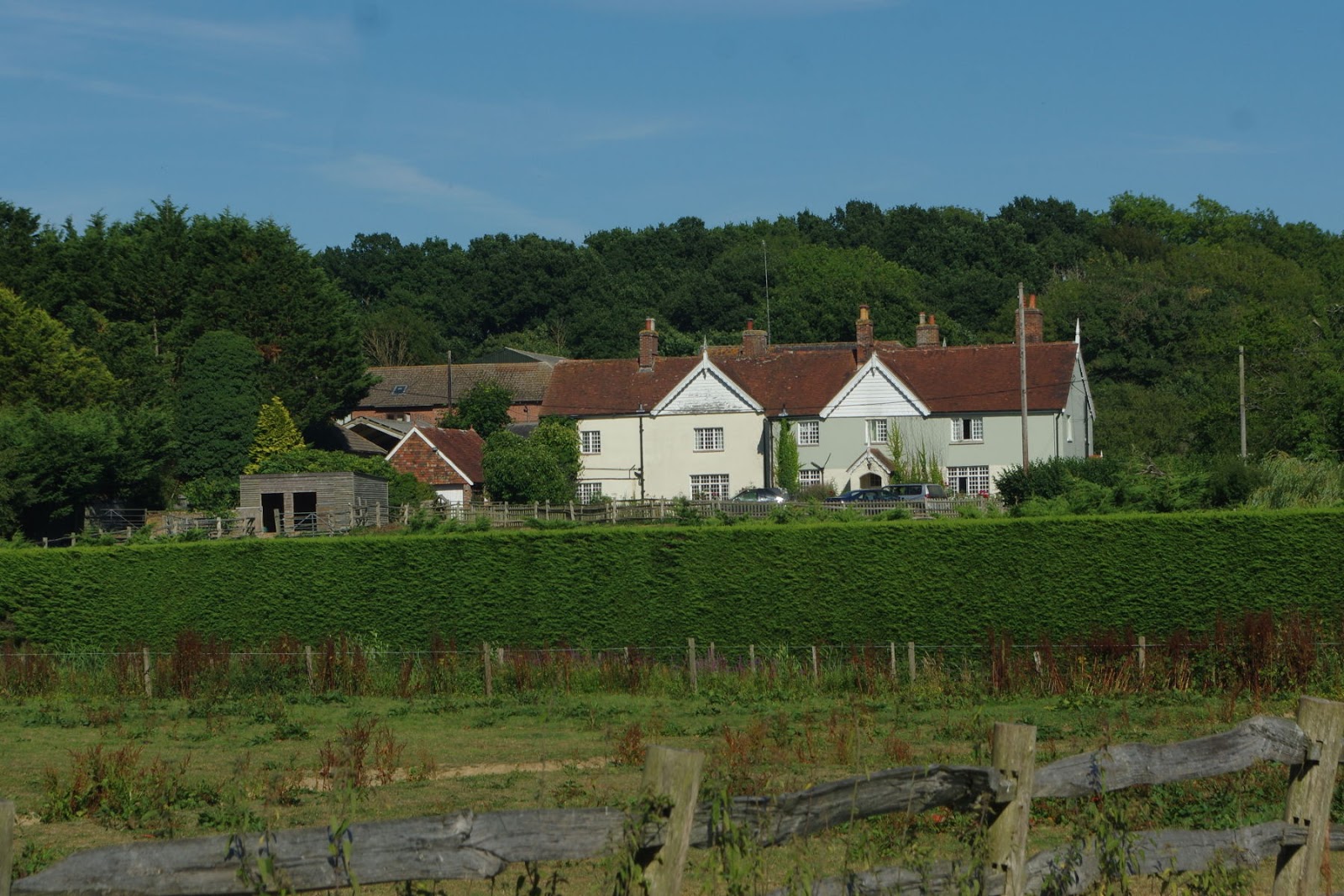
Hempstead Farm

We paused by the mill and Brian explained:

  • The mill had many uses over its long life including: production of silks, cotton products including that which was used to make paper for the Manchester Guardian (which still survives as The Guardian).
  • It closed in 1937
  • There was an attempt to use it to create electricity in 1953.

We moved a little further down Hempstead Lane so we could see Hempstead Farm now the home of the Sussex Horse Rescue Trust. Brian pointed out that it was on the boundaries of three parishes and there many have been a chapel there at one time.  It has been considerable altered over many years. A watercolour by Grimm on the Sussex Weald website shows what the farm looked like in 1786.

Buxted Park

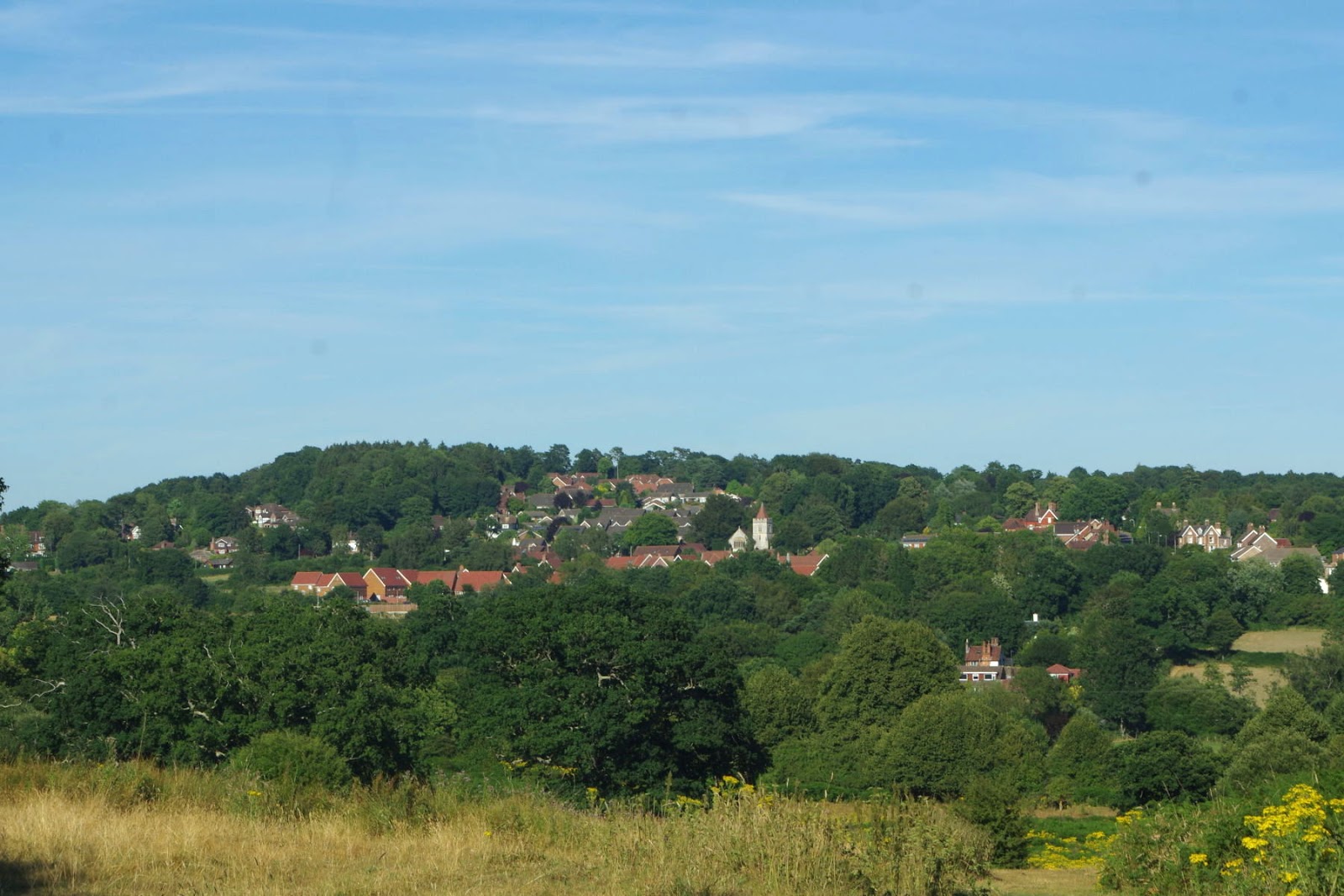
The new Buxted, where the villagers lived after the old fell into decay
Having followed the River Uck into Buxted Park, we were able to see the big house across the lake. Brian outlined some of the history including:

  • The present house was built in 1725
  • Lord Liverpool stopped maintaining the village near the house, forcing the villagers to move to the "New Buxted" on the other side of the valley.
  • There had been a fire in 1940. Although many artworks were rescued the top floor could not be rebuilt due to wartime shortages.

There is more historical information on the hotel's website.

The WW2 pillbox
We visited the pillbox, which is one of a number in the area.

Buxted Church

Christopher Wordsworth's grave
We visited the grave of Christopher Wordsworth, who was the rector of Buxted with Uckfield before the parishes were split. He was the brother of the poet.

Manor Park

Tower Ride - Site of the Roman Kiln
Having cut back through Views Wood, we stopped at a average-looking piece of grass. Back in 1967, when workmen were digging for a main, they discovered a Roman Corn Drying Kiln (Ref. Tebbutt, 1968). Also, people who live in the houses in The Drive have found Roman Pottery.

We then looked at the Water Tower, which once provided Uckfield with all its water, before the main group returned to Bridge Cottage and I went directly home.